"Is there a real judge in there?": she had been in labour for nine hours when a judge appeared on Zoom to decide whether she would have a C-section against her will; now she is suing the hospital
Cherise Doyley, a Jacksonville (Florida) doula with three previous C-sections, wanted a vaginal birth. In September 2024 the hospital went to prosecutors and a judge held a video hearing at her bedside. Hours later she was in the operating room. In September 2026 she filed a federal lawsuit.
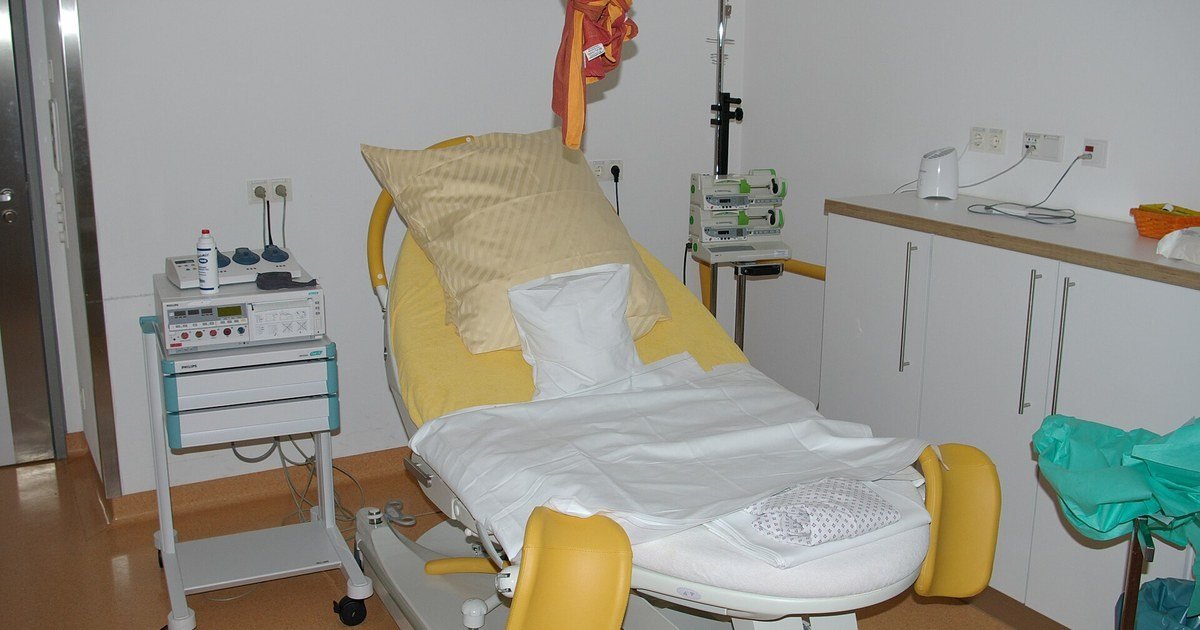
Photo: Arneb / Wikimedia Commons · CC BY-SA 3.0
An empty delivery bed in a hospital; not the hospital or room in this story. Reference photo: Arneb / Wikimedia Commons (CC BY-SA 3.0).
Cherise Doyley had been in labour for about nine hours at UF Health Jacksonville hospital in Florida (US) when several people came into her room, covered her with a sheet and placed a tablet in front of her. On the screen were lawyers, medical advisers and Judge Michael Kalil of Florida's Fourth Judicial Circuit, she told BBC Mundo in an interview published on November 11.
"Is there a real judge in there?" she can be heard asking in the recording of the hearing. It was September 2024 and she was about to give birth to her fourth daughter.
A Zoom hearing at the bedside
The hospital had contacted the state attorney's office because it believed she should have a caesarean section. Doyley, who had had three previous C-sections with complications, had said from the start of her pregnancy that she wanted to try a vaginal birth. She has eight years of experience as a doula and midwifery training, and she argued from her bed, without a lawyer, that she understood the risks.
According to local station News4JAX, the hearing lasted about three hours while she remained in labour. According to the BBC, the hospital's doctors argued that a vaginal birth was unlikely to succeed and that there was a risk of uterine rupture, a potentially fatal complication for mother and baby. Colombian gynaecologist Luis Martín Rodríguez, consulted by the BBC and not involved in the case, explained that the risk rises with each C-section and that, after three, doctors do not usually recommend a vaginal birth.
The judge did not order an immediate C-section: he allowed labour to continue but authorised the hospital to operate without her consent if an emergency arose. That night, doctors reported that the baby's heart rate had dropped and took her to the operating room. The girl was born by C-section and taken to neonatal intensive care.
What prosecutors and the hospital say
The Fourth Circuit state attorney's office told the BBC that the hospital notified it that a 41-week baby "was at serious risk of death" and that the mother refused the intervention, so it brought the case before the court, which ruled "after hearing from the mother and the medical professionals". "The state attorney's office does not make medical decisions," it added. The hospital said it could not comment because of patient confidentiality.
The lawsuit
On September 8, 2026, two years after the birth, Doyley filed a federal lawsuit against UF Health and several people involved, News4JAX reported. Her lawyers argue that staff misrepresented facts to obtain the order, including falsely portraying her as suicidal and describing a drop in the baby's heart rate as an emergency that, according to the lawsuit, did not meet the conditions set by the judge. The allegations have not been proven in court.
ProPublica journalist Amy Yurkanin, who has written about the case, told the BBC that each state decides how much power a woman keeps over birth decisions and that in Florida courts have upheld that, in certain circumstances, a judge can intervene.
"You should always have a say in your medical care," Doyley told the BBC. The case has reopened a difficult debate in the United States: where a mother's autonomy ends and the baby's protection begins.
Read also: Ex-Brigadas Rojas de 74 años se fugó con un arnés desde un quinto piso · Vecino de Comas enfrentó con una piedra a asaltantes armados
Sources
For information only. It does not replace advice from a health professional. Medical disclaimer