A mathematician says he solved the Riemann hypothesis, math's greatest puzzle, with AI: why nobody is calling it settled yet
Levent Alpöge, a mathematician at Anthropic, said he found a proof, with help from Claude, of a problem open since 1859 that carries a one-million-dollar prize. He released the proof as Lean code, but it has not yet been independently verified.
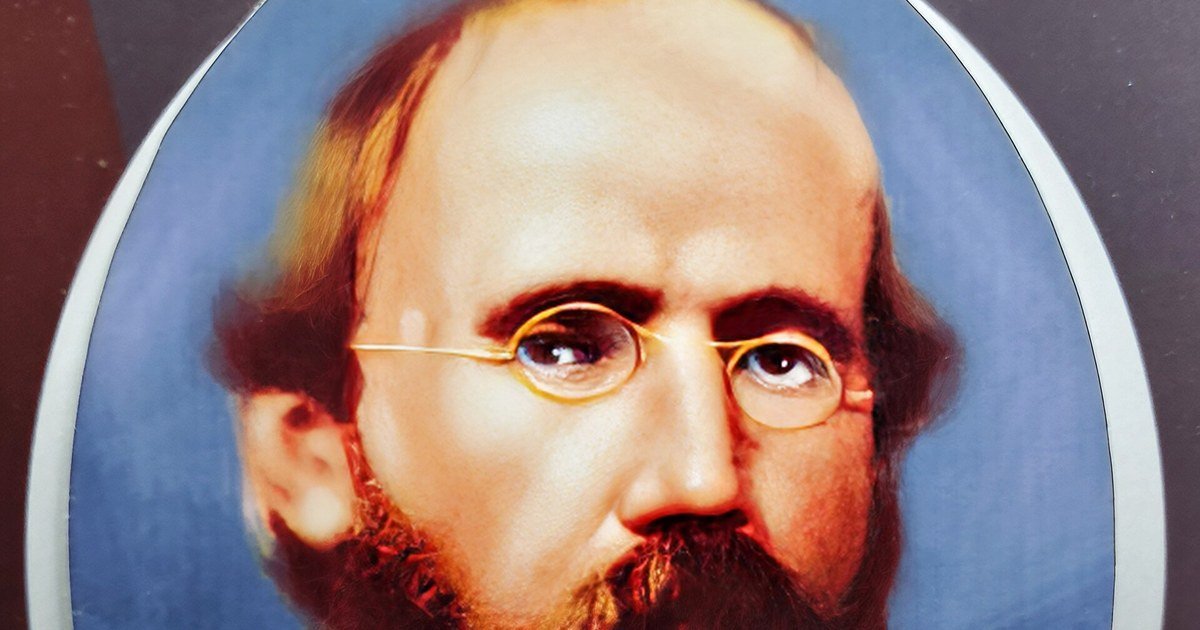
Photo: Aliva Sahoo / Wikimedia Commons · CC BY-SA 4.0
Portrait of Bernhard Riemann, the mathematician who proposed the hypothesis in 1859. File photo: Aliva Sahoo / Wikimedia Commons (CC BY-SA 4.0).
Mathematician Levent Alpöge, an employee of artificial intelligence company Anthropic, said on Friday, 20 November, that working with the Claude model he had found a proof of the Riemann hypothesis, considered by many the most famous problem in mathematics.
The news went around the world within hours. But experts are urging patience.
What the Riemann hypothesis is
It was proposed by German mathematician Bernhard Riemann in 1859 and concerns how prime numbers are distributed. It is one of the Clay Mathematics Institute's Millennium Prize Problems, which offers one million dollars for an accepted solution, New Scientist noted.
“I believe I have, working with Claude, discovered a proof of the Riemann Hypothesis,” Alpöge wrote on his website, as quoted by The Verge, New Scientist and Scientific American. He added that the method extends to the so-called Generalized Riemann Hypothesis.
A proof written in code
Alpöge did not publish a paper for human readers. He released the proof in Lean, a language that lets a computer check every logical step. According to New Scientist, he said an unpublished version ran to more than 250,000 pages.
If the code compiles, the result is considered very solid, but specialists also need to check that the formalized statement really matches the problem. “Let's see if it compiles first,” said mathematician Kevin Buzzard of Imperial College London.
Why it is not official yet
The proof has not yet been independently verified. The Verge reported that Anthropic had not commented and that in August the company had said it did not expect Claude's techniques to lead to a proof of the hypothesis. The announcement came one day after the company's stock market debut, something Alpöge addressed in his note.
The Clay Institute's rules require a solution to be published and to withstand at least two years of scrutiny, with general acceptance in the mathematical community, before it can be considered for the prize.
If confirmed, it would be a historic milestone for mathematics and for artificial intelligence. For now, it is a claim the academic world has only just begun to review.
Read also: Ganó un premio de novela y un detector dice que la escribió una IA · Jensen Huang renuncia como CEO de Nvidia
Sources
- New Scientist: Anthropic mathematician claims AI-assisted proof of the Riemann hypothesis (20 nov 2026)
- The Verge: Anthropic mathematician claims to have solved prestigious Millennium Prize problem with Claude (20 nov 2026)
- Scientific American: Anthropic mathematician claims to prove Riemann hypothesis (20 nov 2026)
For information only. It does not replace advice from a health professional. Medical disclaimer