Why do big dogs live shorter lives? What science says about the canine biological clock
A Great Dane rarely makes it past 8 or 9, while a Chihuahua can live beyond 15. Scientists have spent years trying to explain this paradox, and research on dogs' "epigenetic clock" offers fascinating clues.
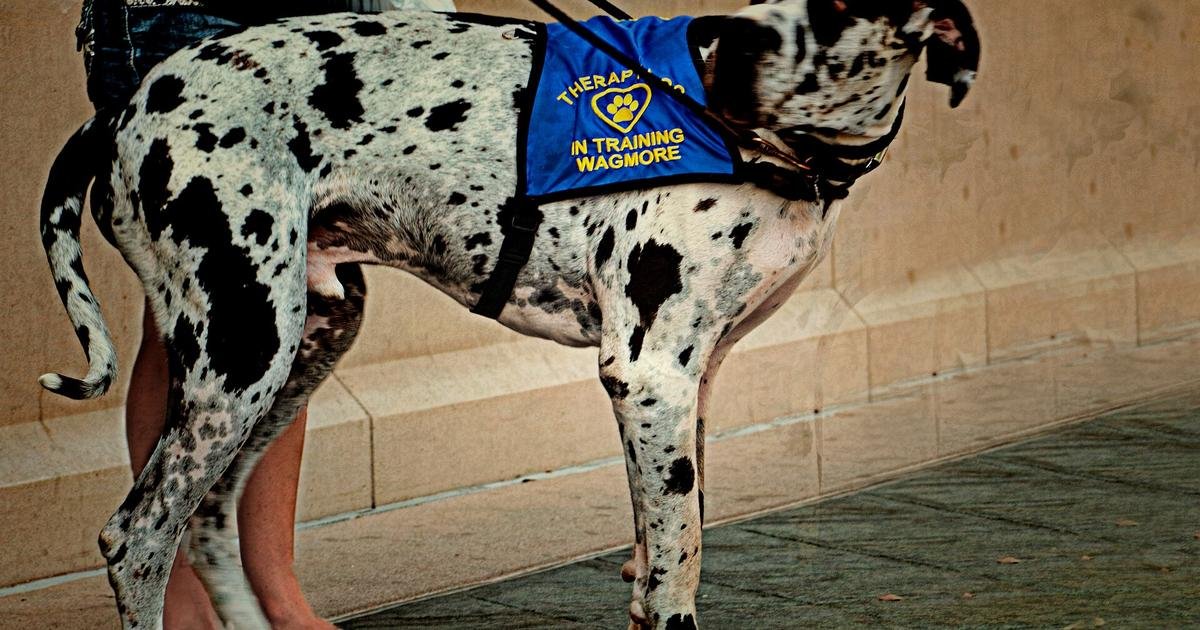
Photo: bluesbby from Mountain View, USA / Wikimedia Commons · CC BY 2.0
Across most of the animal kingdom, big animals outlive small ones: an elephant lives longer than a mouse, and a whale longer than a squirrel. But within a single species, dogs break that rule. A Great Dane or a Mastiff rarely lives past 8 or 9, while a Chihuahua or a toy poodle can reach 15 or more. Why?
A paradox that puzzles biologists
The gap is huge. Several studies using veterinary records from thousands of dogs have found that, on average, every few extra kilograms of body weight is linked to a somewhat shorter life. Giant breeds may live half as long as miniature breeds. It's one of the largest variations in lifespan known within a single mammal species.
What's striking is that all dogs, from Yorkies to Saint Bernards, belong to the same species and descend from wolves. The size differences were created in just a few centuries of selective breeding, which makes dogs a natural laboratory for studying aging.
Growing fast comes at a cost
One of the leading hypotheses is that big dogs grow at breakneck speed. A Great Dane puppy can increase its weight a hundredfold in its first year and a half. That rapid growth depends on hormones such as insulin-like growth factor 1 (IGF-1), which is more active in large dogs. Researchers suspect this frantic pace may build up cellular damage and raise the risk of diseases later in life, including some cancers.
A classic study from the University of Göttingen, which analyzed data from more than 70 breeds, concluded that big dogs not only begin aging earlier, but once aging starts, it moves faster. "Their lives seem to unwind in fast motion," the authors summed up.
The epigenetic clock: the age written in DNA
In recent years, scientists have developed a tool called the epigenetic clock. It doesn't measure calendar years but chemical changes in DNA (called methylation) that build up with age. In humans, these clocks can estimate a person's "biological age", which may be older or younger than their actual age.
When researchers applied these clocks to dogs, they found something striking: a dog's first years are equivalent to many human years, and then the pace slows. That's why the old rule that "one dog year equals seven human years" is too simple. A one-year-old dog is biologically closer to a human of about 30 than to a 7-year-old child.
Several recent studies also suggest that in large breeds, certain epigenetic markers advance faster, which would fit their shorter life expectancy. The research is ongoing and the results are still being refined, but they point in the same direction.
The Dog Aging Project
In the United States, the Dog Aging Project follows tens of thousands of dogs of every breed and size, with owners filling out surveys and sending samples. The goal is to understand which factors (genes, diet, exercise, environment) shape how long and how well dogs age. Because dogs share our homes, our air and sometimes our habits, what we learn from them could also help us understand human aging.
The project is even testing whether certain drugs can extend dogs' healthy lifespan, though for now these are trials and there are no recommendations for the public.
What can owners do?
No trick changes genetics, but some steps help any dog, big or small, live longer and better:
- Keep a healthy weight. A famous study of Labradors found that those that ate a bit less and stayed leaner lived about two years longer than their overweight siblings.
- Regular exercise suited to age and breed.
- Vet checkups, especially from the "senior" stage, which arrives earlier in giant breeds, around age 5 or 6.
- Dental care, often overlooked, which affects overall health.
- Mental stimulation: games, sniffing and new walks keep the brain active.
- For large-breed puppies, a growth-specific diet that supports controlled growth, following your vet's advice.
More than numbers
If you have a big dog, these figures may sound sad. But an average isn't destiny: there are Great Danes that reach 12 and Chihuahuas that don't make it past 10. What is clear is that every stage of a dog's life matters, and that the care we give today shapes their quality of life tomorrow. Meanwhile, science keeps learning from our four-legged companions about the mystery of aging.
For information only. It does not replace advice from a health professional. Medical disclaimer
You may also like
 Health
Respiratory virus season is here: flu, COVID and RSV, and how to prepare this fall
 Viral world
The year's funniest animal photos are taking over social media again: the contest that makes us laugh and protect nature
 Home remedies
Ginger for nausea: what the evidence says and how to use it safely
 Health
Glucose monitors on your arm: useful for everyone or only for people with diabetes?
 Animals
The Amazon's "ghost dog": the wild canid almost no one has seen, now being revealed by camera traps
 Relationships