The "Wow!" signal: 72 seconds from space that no one has fully explained
In 1977, a radio telescope in Ohio picked up a signal so strong and so strange that the astronomer who spotted it wrote "Wow!" on the printout. It never came back. Was it an alien message, a natural phenomenon or a glitch? Here's what we know.
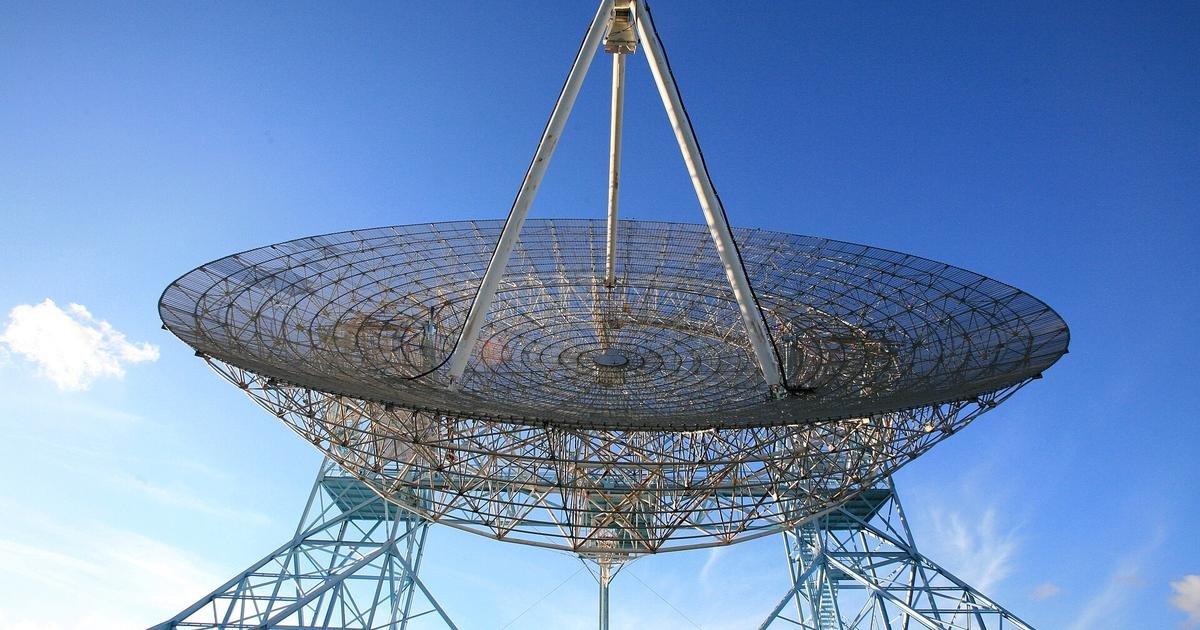
Photo: Steve Jurvetson from Menlo Park, USA / Wikimedia Commons · CC BY 2.0
On August 15, 1977, the Big Ear radio telescope at Ohio State University was sweeping the sky as it did every day, as part of a search for extraterrestrial intelligence (SETI). A few days later, volunteer astronomer Jerry Ehman was going through the long paper printouts of data by hand when he came across something that left him speechless. He circled a sequence of letters and numbers in red pen and wrote next to it: "Wow!" That was the birth of one of modern astronomy's great mysteries.
What the telescope picked up
The circled sequence was "6EQUJ5". It wasn't a message: it was how the computer represented the signal's intensity. The numbers 1 to 9 marked increasing levels, and letters continued the scale to even higher values. The "U" corresponded to an intensity about 30 times above the background noise. It was by far the strongest thing the project had ever recorded.
But it wasn't just the strength that stood out:
- The frequency: it was very close to 1,420 megahertz, the natural frequency of hydrogen, the most abundant element in the universe. Many scientists had suggested that a civilization trying to communicate would choose exactly that frequency, since any astronomer would know it.
- The bandwidth: it was very narrow, like artificial transmissions, unlike most natural sources known at the time.
- The duration: the telescope was fixed and relied on Earth's rotation to scan the sky. Any given point passed through its field of view in about 72 seconds. The signal rose and fell in exactly the pattern expected from a distant source fixed in the sky.
The problem: it never came back
Big Ear had two receivers that observed the same patch of sky a few minutes apart. The signal showed up in one but not the other. Since then, astronomers around the world have pointed far more sensitive telescopes at that region of the sky, in the constellation Sagittarius, dozens of times. Nothing like it has ever been detected again.
In science, a result that can't be repeated is very hard to interpret. So although the Wow! signal remains the most famous candidate in SETI history, very few scientists consider it evidence of alien life.
Proposed explanations
- Earthly interference or a satellite. This was investigated, but the frequency lies in a protected band where transmissions are banned, and no matching satellite or aircraft was found.
- Comets. In 2016, a researcher proposed that two comets passing through that region could have produced the signal from their hydrogen clouds. The idea drew heavy criticism from other astronomers, who noted that comets don't produce emissions that strong or that narrow.
- A rare natural phenomenon. More recently, a team of researchers proposed that the signal may have come from a cloud of cold hydrogen that briefly brightened when struck by an intense burst of radiation from an object such as a magnetar. Reviewing data from other radio telescopes, they found similar faint signals elsewhere in the sky. It's an intriguing hypothesis, but it still needs confirmation.
- An alien signal. It can't be ruled out entirely, but without a repeat it can't be confirmed either.
A fresh look at old data
Recently, a group of researchers, with help from volunteers, digitized and reanalyzed Big Ear's old paper records. That work refined the position the signal came from and its exact frequency, which will help future searches be more precise. The original telescope no longer exists: it was dismantled in the late 1990s to make way for a golf course and housing.
Humanity's reply
In 2012, for the signal's 35th anniversary, the Arecibo Observatory in Puerto Rico beamed a symbolic "reply" toward Sagittarius, including thousands of messages from people around the world. It was more of an outreach gesture than a scientific experiment, but it shows how much fascination the signal still inspires.
Why it still captivates us
The Wow! signal has everything that makes a mystery compelling: real data, a moment of awe and an enormous unanswered question. Are we alone in the universe? Today, projects such as Breakthrough Listen scan millions of frequencies at once using some of the best radio telescopes on the planet. If an artificial signal is ever confirmed, that red-ink note from 1977 will probably be remembered as the first great "what if?"
A mystery that teaches doubt
Beyond aliens, the story of the Wow! signal is a good lesson in how science works: an exciting finding isn't enough; it must be repeated, errors ruled out and natural explanations explored before reaching extraordinary conclusions. Nearly 50 years later, the mystery remains open. And perhaps that's the most beautiful part of all.
For information only. It does not replace advice from a health professional. Medical disclaimer
You may also like
 Health
Respiratory virus season is here: flu, COVID and RSV, and how to prepare this fall
 Curiosities
Jonathan, the 194-year-old tortoise: what his genes reveal about aging more slowly
 Viral world
The year's funniest animal photos are taking over social media again: the contest that makes us laugh and protect nature
 Home remedies
Ginger for nausea: what the evidence says and how to use it safely
 Health
Glucose monitors on your arm: useful for everyone or only for people with diabetes?
 Animals