The world's driest desert bursts into bloom: inside Atacama's "flowering desert"
Images of fuchsia, yellow and white carpets of flowers in the middle of Chile's Atacama Desert are making the rounds online again. Here's why it happens, why it doesn't happen every year and how to visit without harming such a fragile phenomenon.
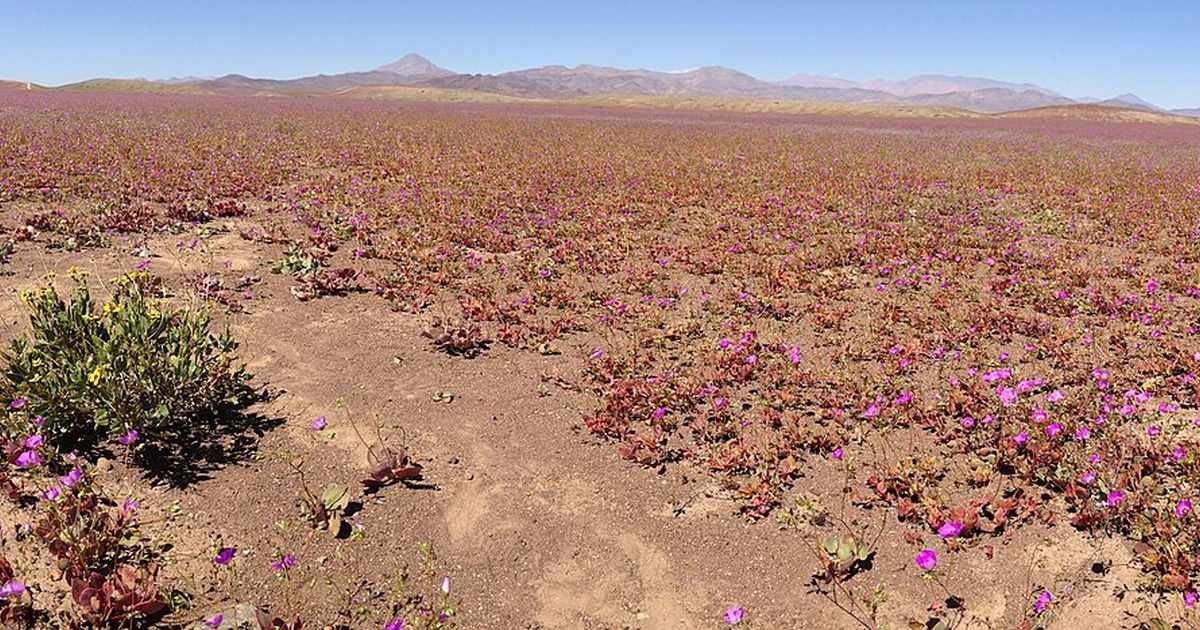
Photo: Pato Novoa from Valparaíso, Chile / Wikimedia Commons · CC BY 2.0
It looks like a Photoshop job, but it's real. The Atacama Desert in northern Chile is considered the driest non-polar desert on the planet: some areas can go years without a single drop of rain. And yet, every so often, its southern part stages one of the world's most surprising natural spectacles: the desierto florido, or flowering desert, when millions of flowers sprout at once and paint the landscape with color.
What the flowering desert is
Beneath Atacama's sand and stones lie millions of seeds, bulbs and rhizomes that can wait dormant for years, even decades. When a winter brings above-average rain, that moisture wakes the plants. Between late winter and the southern spring, usually from September to November, the desert is covered in flowers for a few weeks.
More than two hundred species have been described taking part in the phenomenon, many of them endemic, meaning they exist nowhere else. Among the best known is the pata de guanaco ("guanaco's hoof"), an intense fuchsia flower that dominates many photos, along with lion's claws, añañucas and various lilies and mallows.
Why doesn't it happen every year?
Because it depends on rain. Rainfall in this part of Chile is strongly influenced by El Niño, which warms Pacific waters and can bring storms to the desert coast. That's why the big blooms tend to coincide with El Niño years, though not always. If too little rain falls, the bloom is sparse or doesn't happen at all. If too much falls at once, it can cause damage as well. The balance is delicate.
In some years the bloom is spectacular, covering large areas of the Atacama region, especially near towns such as Copiapó, Vallenar and Huasco. In other years only a few patches of color appear.
An ecosystem that wakes up
The flowering desert isn't only about flowers. With them come pollinating insects such as native bees, butterflies and beetles, as well as lizards, birds and small mammals that take advantage of the temporary abundance of food. In just a few weeks, the plants complete their life cycle: they grow, flower, get pollinated and produce new seeds that will lie buried again until the next rain.
Scientists study the phenomenon because it helps explain how life adapts to extreme conditions. The ability of these seeds to survive years of drought is an extraordinary example of resilience.
The photos that go viral
Whenever there's a bloom, photos of fuchsia hillsides under an intensely blue sky get shared around the world. Many are real, but it pays to be critical: some old images are recycled every year as if they were new, and others are heavily oversaturated with filters. To find out what the desert looks like at a given moment, it's best to check official sources, such as Chile's forestry service (CONAF) or regional tourism offices, which report on where flowers are blooming.
How to visit responsibly
The flowering desert draws thousands of visitors, which can put the plants at risk. Chilean authorities and experts ask people to follow a few simple rules:
- Don't pick flowers or dig up bulbs. Some species are protected, and pulling them up stops them from producing seeds.
- Stay on roads and trails and don't drive over flowering areas. Tires compact the soil and destroy seeds.
- Don't trample plants for a photo. A good zoom lens is your best friend.
- Take your trash home with you.
- Respect protected areas, such as Llanos de Challe National Park, created partly to protect species unique to this ecosystem.
- Prepare for the desert: water, sunscreen, a hat and warm layers for the night, since temperatures drop sharply.
A reminder of life's resilience
The flowering desert is a lesson in patience: seeds that wait silently for years and wake up the moment they get a chance. That's why these images fascinate us so much. In one of the driest places on Earth, a little rain is enough for life to burst into color. If you're ever lucky enough to see it, remember to enjoy it gently, so it can keep blooming for many years to come.
For information only. It does not replace advice from a health professional. Medical disclaimer
You may also like
 Health
Respiratory virus season is here: flu, COVID and RSV, and how to prepare this fall
 Curiosities
Jonathan, the 194-year-old tortoise: what his genes reveal about aging more slowly
 Home remedies
Ginger for nausea: what the evidence says and how to use it safely
 Health
Glucose monitors on your arm: useful for everyone or only for people with diabetes?
 Animals
The Amazon's "ghost dog": the wild canid almost no one has seen, now being revealed by camera traps
 Relationships