The nurse shark, the "gentle giant" that rests in piles and vacuums up its food
Videos of divers surrounded by nurse sharks resting on the seabed regularly go viral. But behind their laid-back reputation is a fascinating and little-understood animal. Here are some surprising facts, and why they still deserve respect.
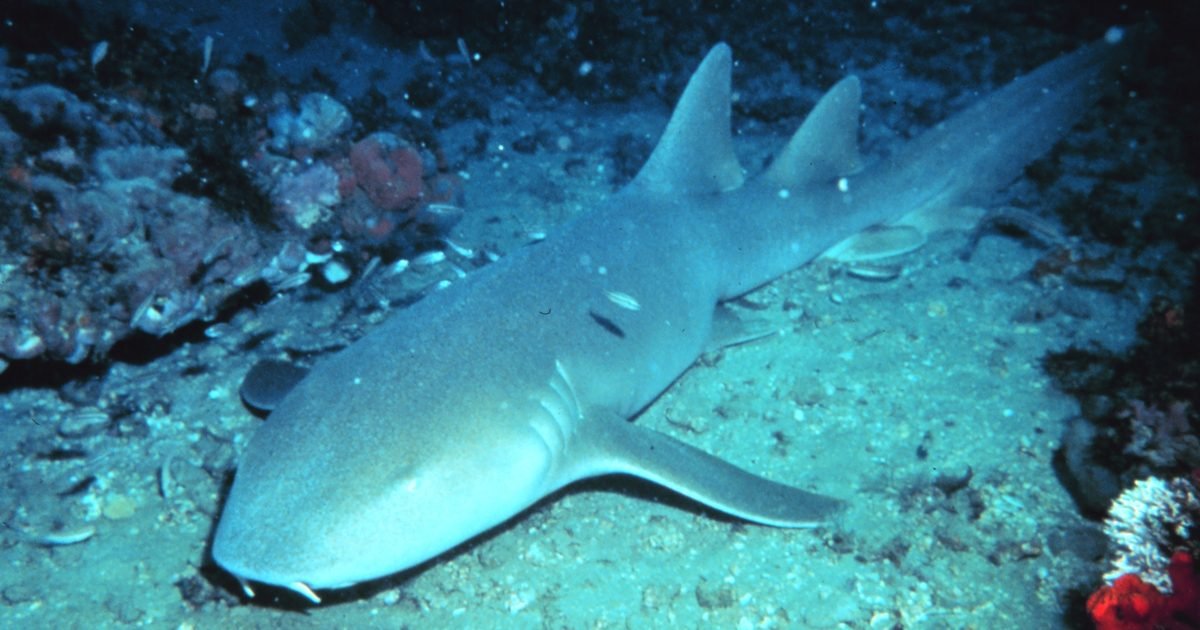
Photo: Wikimedia Commons · Public domain
If you've ever seen a video of a diver swimming near a group of sharks piled up on a sandy bottom, motionless as if taking a nap, they were probably nurse sharks (Ginglymostoma cirratum). They're common in the warm waters of the western Atlantic, the Caribbean and the eastern Pacific, from Florida and the Bahamas down to Brazil, and from Mexico to Peru. Their relaxed look has made them social-media stars, but there's much more to them.
What they look like
Nurse sharks can grow to more than 3 meters (10 feet) long. They have a brown or yellowish body, a broad, flattened head and two small fleshy feelers near the mouth called barbels, which help them detect prey hidden in the sand. Their eyes are small, and the mouth sits on the underside of the head, perfect for foraging on the bottom.
An underwater vacuum cleaner
Unlike sharks that chase prey at high speed, the nurse shark is a nocturnal ambush hunter. Its technique is unusual: it rapidly expands its throat to create powerful suction that sucks prey in, like a vacuum cleaner. That's how it catches fish, octopuses, lobsters, crabs, sea urchins and sea snails tucked among rocks or buried in sand. Its small, strong teeth can crush shells.
Why it can lie still
Many sharks have to keep swimming so that water flows over their gills and they get oxygen. The nurse shark, by contrast, can actively pump water using muscles in its mouth and throat. That's why it can spend hours motionless on the bottom, often under rock ledges or in caves, during the day. They're frequently found resting in groups, sometimes on top of one another. Scientists are still studying why, though they're probably just picking the best shelters available.
Fun facts
- Their name's origin isn't entirely clear. One theory links it to the sucking sound they make while feeding, said to resemble a nursing baby; another to an old word used for certain sharks.
- They're ovoviviparous: eggs develop inside the mother and the pups are born fully formed, in litters that can exceed 20.
- Slow breeders: females typically reproduce every two years, so populations recover slowly.
- Long-lived: they're estimated to live for several decades.
- Creatures of habit: some tagging studies show they return to the same areas to mate year after year.
Calm, but not a cuddly toy
Nurse sharks have a reputation for being harmless and, in general, they aren't aggressive toward people. However, bites have been recorded, almost always when someone has disturbed, touched, grabbed the tail of or tried to feed one. Their bite is strong and, because their strategy is to suck and hold, they sometimes don't let go easily. Experts stress that they're wild animals and that the safest approach, for them and for us, is to watch from a distance.
Responsible tourism
In parts of the Caribbean and Central America, swimming with nurse sharks is a tourist attraction. That can benefit local communities and support conservation, but only if it's done right. Some recommendations:
- Choose operators that don't feed the animals or allow touching.
- Keep a respectful distance and don't block their path.
- Avoid sunscreens that may harm reefs; look for reef-friendlier options or wear swimwear that covers your skin.
- Don't stand on or touch the coral.
- Respect group limits and the rules of marine protected areas.
Threats
Although they're not among the most endangered sharks, their numbers have fallen in some areas because of fishing (targeted or as bycatch), the degradation of coral reefs and the loss of mangroves, which serve as nurseries for young sharks. The International Union for Conservation of Nature lists the species as Vulnerable globally. Because they reproduce slowly, any added pressure hits them hard.
A friend of the reef
As a predator of bottom-dwelling invertebrates and fish, the nurse shark helps keep the reef ecosystem in balance. Protecting reefs, mangroves and seagrass beds also means protecting this gentle giant. The next time you see one of those viral videos of sharks snoozing in a heap, remember you're looking at one of the ocean's most curious and valuable residents.
For information only. It does not replace advice from a health professional. Medical disclaimer
You may also like
 Health
Respiratory virus season is here: flu, COVID and RSV, and how to prepare this fall
 Curiosities
Jonathan, the 194-year-old tortoise: what his genes reveal about aging more slowly
 Viral world
The year's funniest animal photos are taking over social media again: the contest that makes us laugh and protect nature
 Home remedies
Ginger for nausea: what the evidence says and how to use it safely
 Health
Glucose monitors on your arm: useful for everyone or only for people with diabetes?
 Relationships